When perimenopause enters the room
Field Study: Design of Intimacy 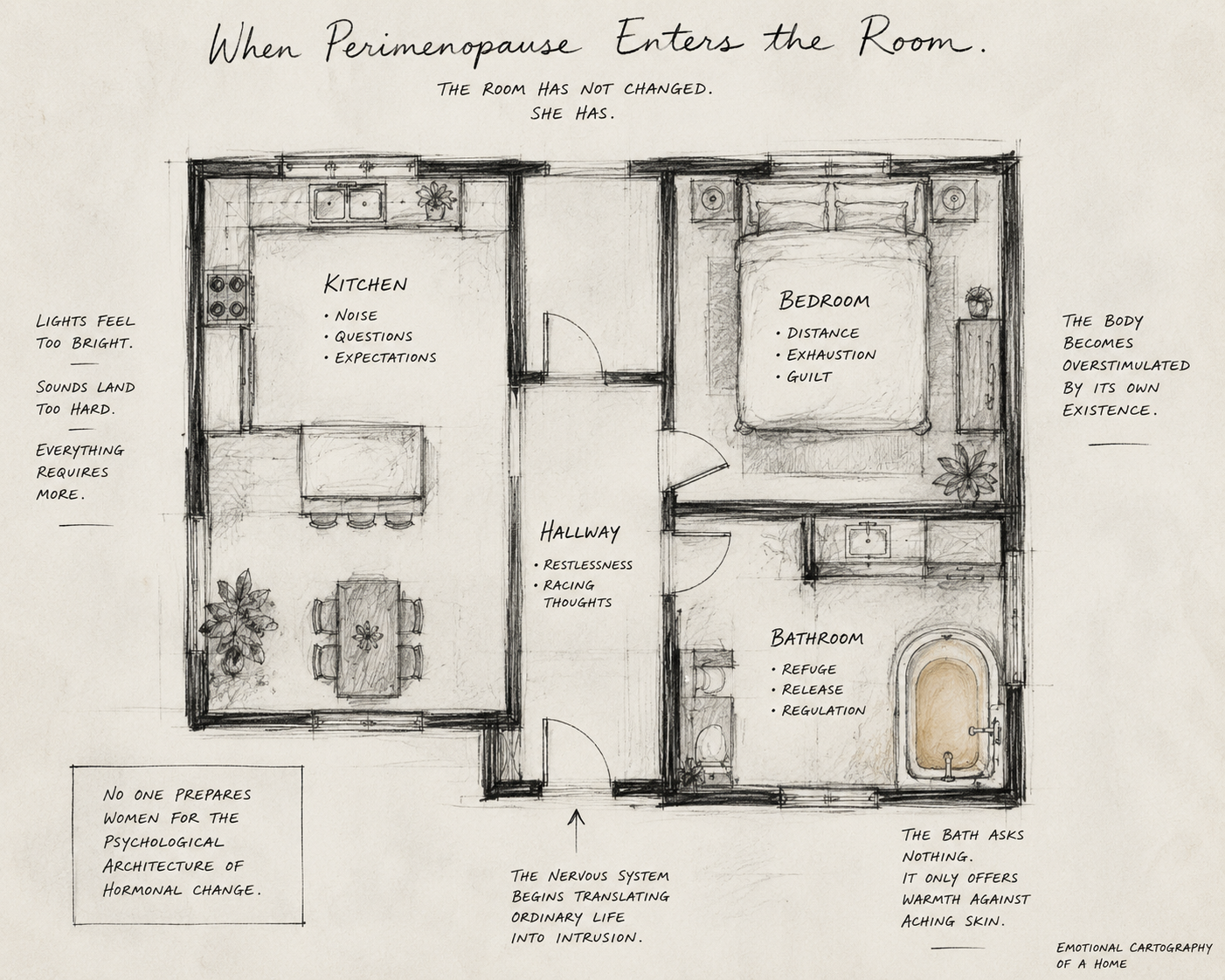
The lights are not bright.
They only feel violent now.
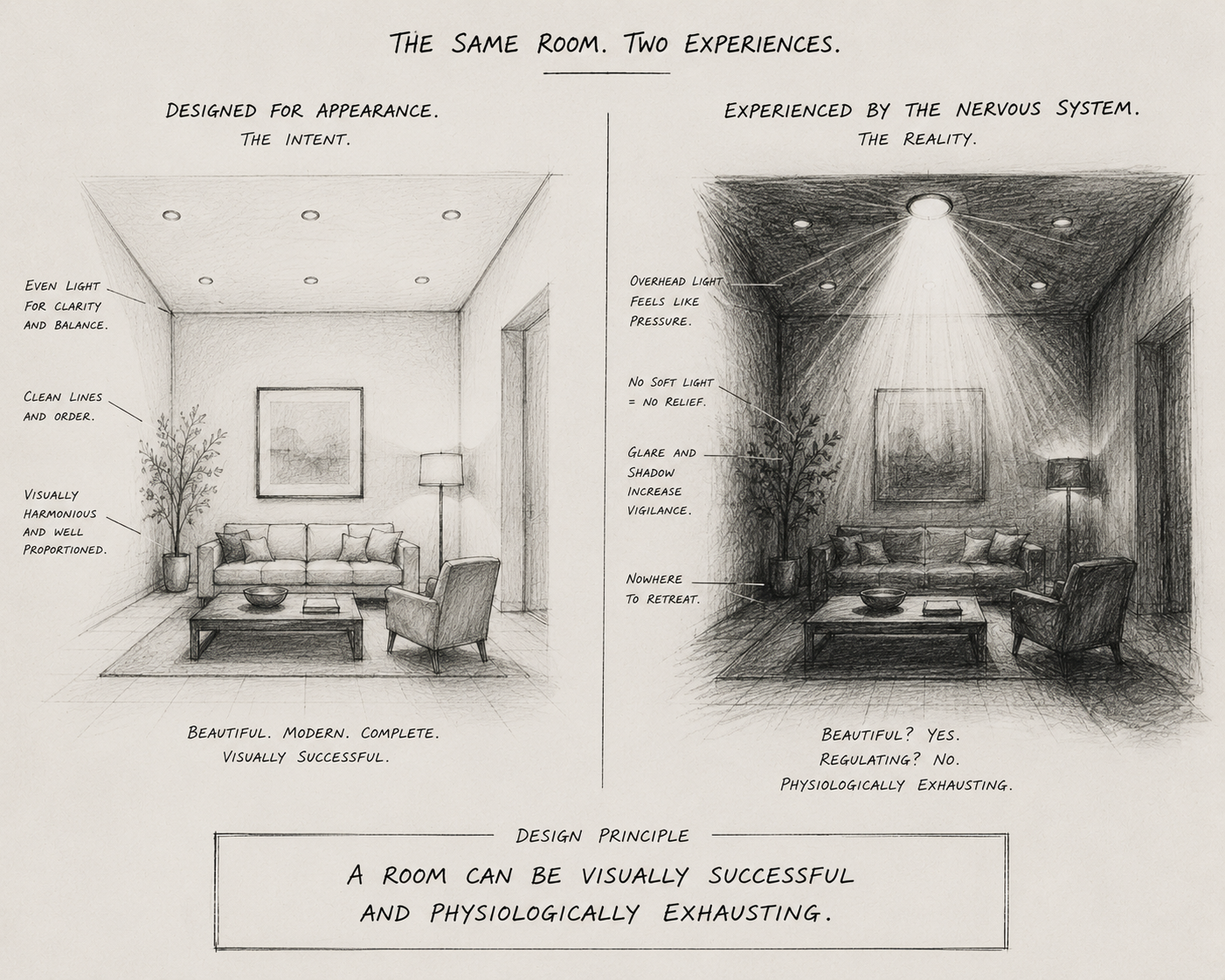
A lamp left on in the corner.
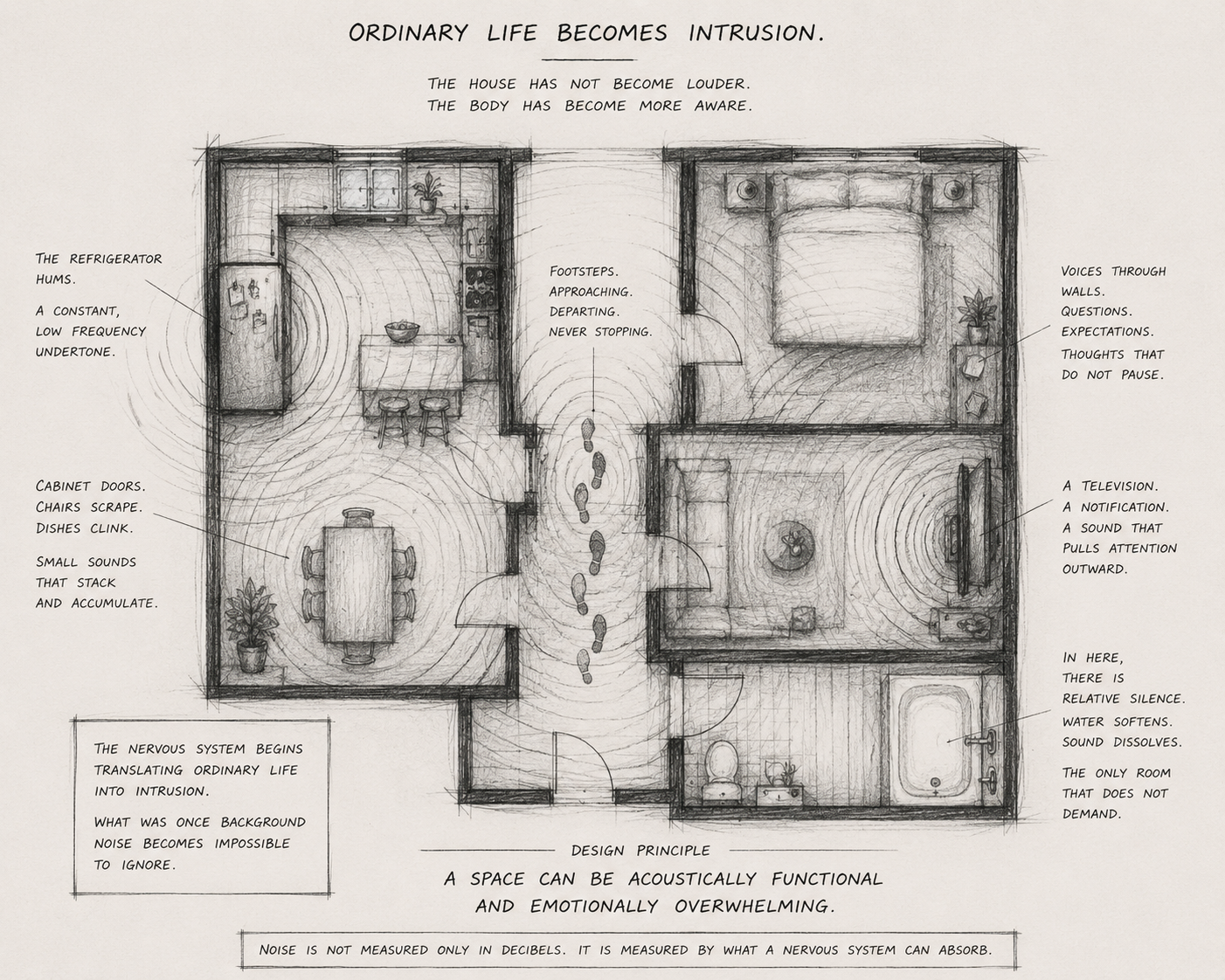
The hum of the refrigerator.
Cabinet doors closing.
Footsteps approaching too quickly.
The nervous system begins translating ordinary life into intrusion.
She cannot explain why the walls suddenly feel emotionally cold.
Why certain colors exhaust her.
Why sound now arrives inside the body instead of around it.
The room has not changed.
She has.
Or maybe that is the grief of it.
A woman once able to carry entire households on her back now stands in the kitchen trying not to cry because someone asked her a simple question at the wrong volume.
Everyone thinks the argument is about tone.
IT IS NOT
It is about the invisible labor of remaining regulated while her body renegotiates estrogen, sleep, temperature, memory, desire, softness, patience, identity, and selfhood all at once.
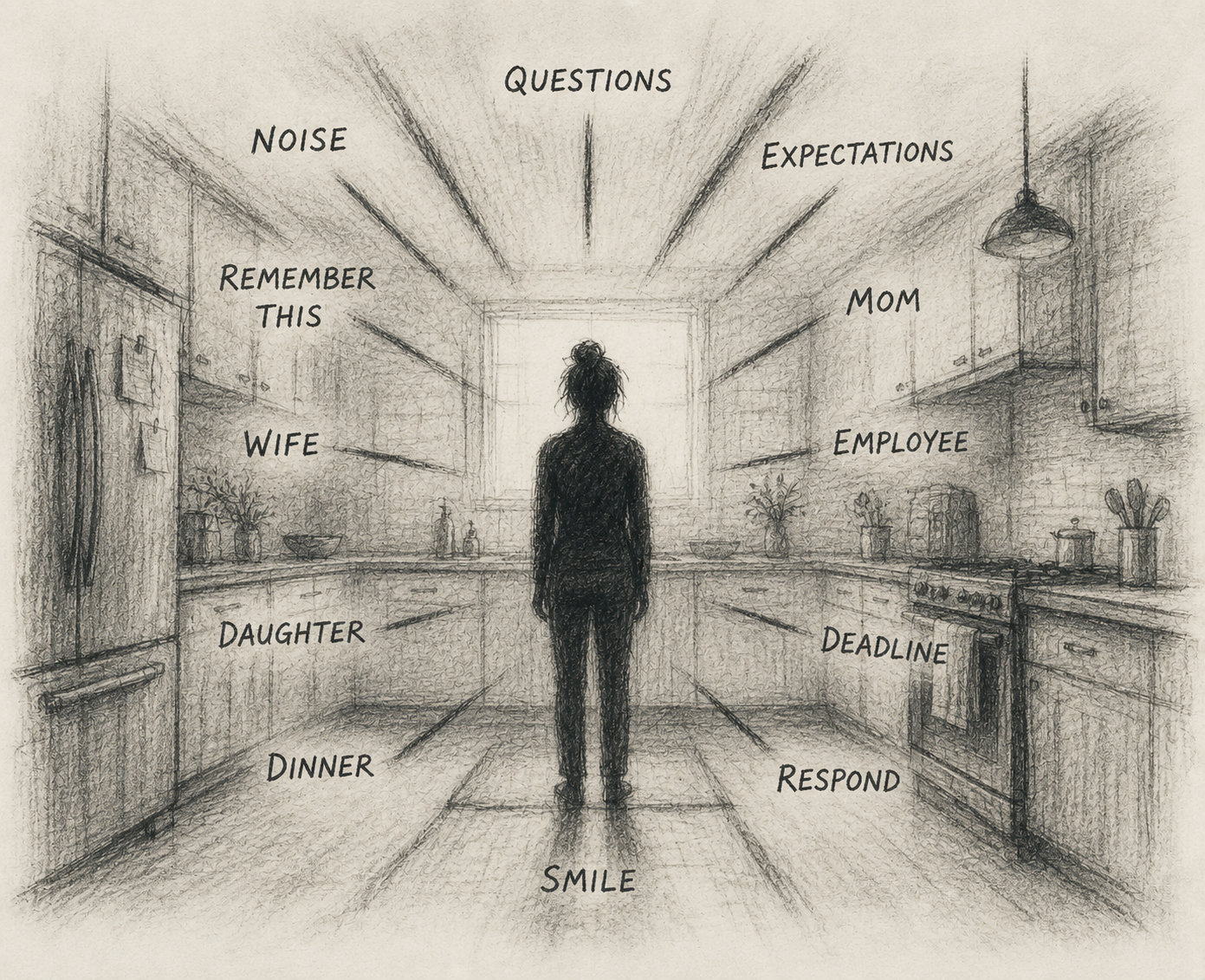
The body becomes overstimulated by its own existence.
She escapes to the bathroom.
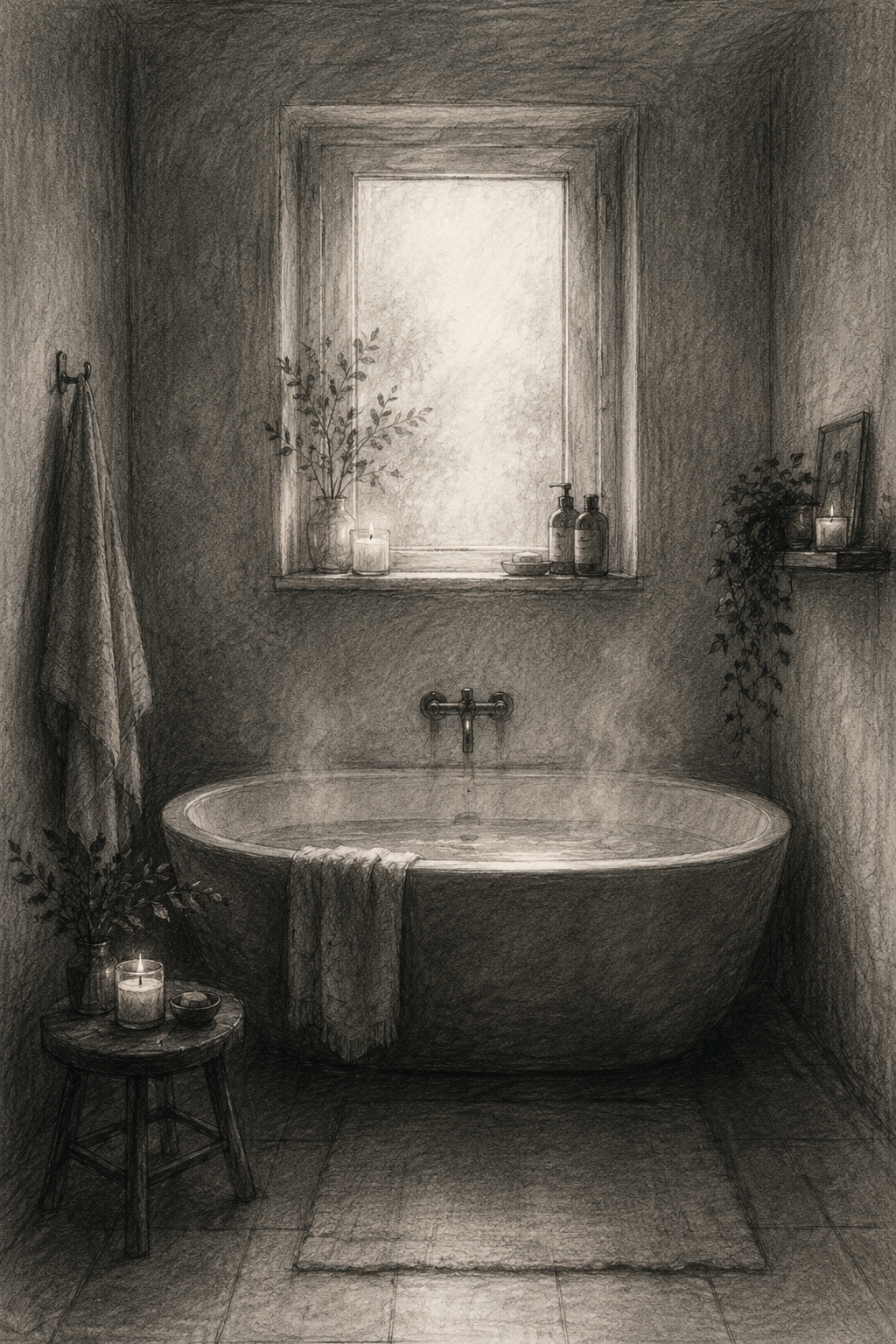
Water fills the tub slowly.
Steam rises against porcelain.
For a moment, the room becomes womb-like.
Not beautiful.
Not luxurious.
Protective.
The heat wraps around her in a way language no longer can.
No explanation.
No emotional performance.
No ability to nurture anyone else.
The bath asks nothing from her.
Only breath.
Only survival.
Only warmth.
Against aching skin.
Later
she will stand under cold water trying to outrun the heat trapped beneath her flesh.
Later
she will apologize for being distant.
For being irritable.
For not being easy to hold.
But underneath the apology is terror.
Because no one prepares women for the
psychological architecture
of perimenopause.
The way intimacy shifts when your own body no longer feels predictable.
The way marriage absorbs silent confusion.
The way guilt settles into furniture.
The way exhaustion changes the acoustics of a home.
Tonight, she sleeps downstairs.
Not because love disappeared.
But because her nervous system could not hold one more thing touching it.
And somewhere between the cold sheets, the dim hallway light, and the sound of water
draining from the tub…
The house learns her suffering before the people inside it do.
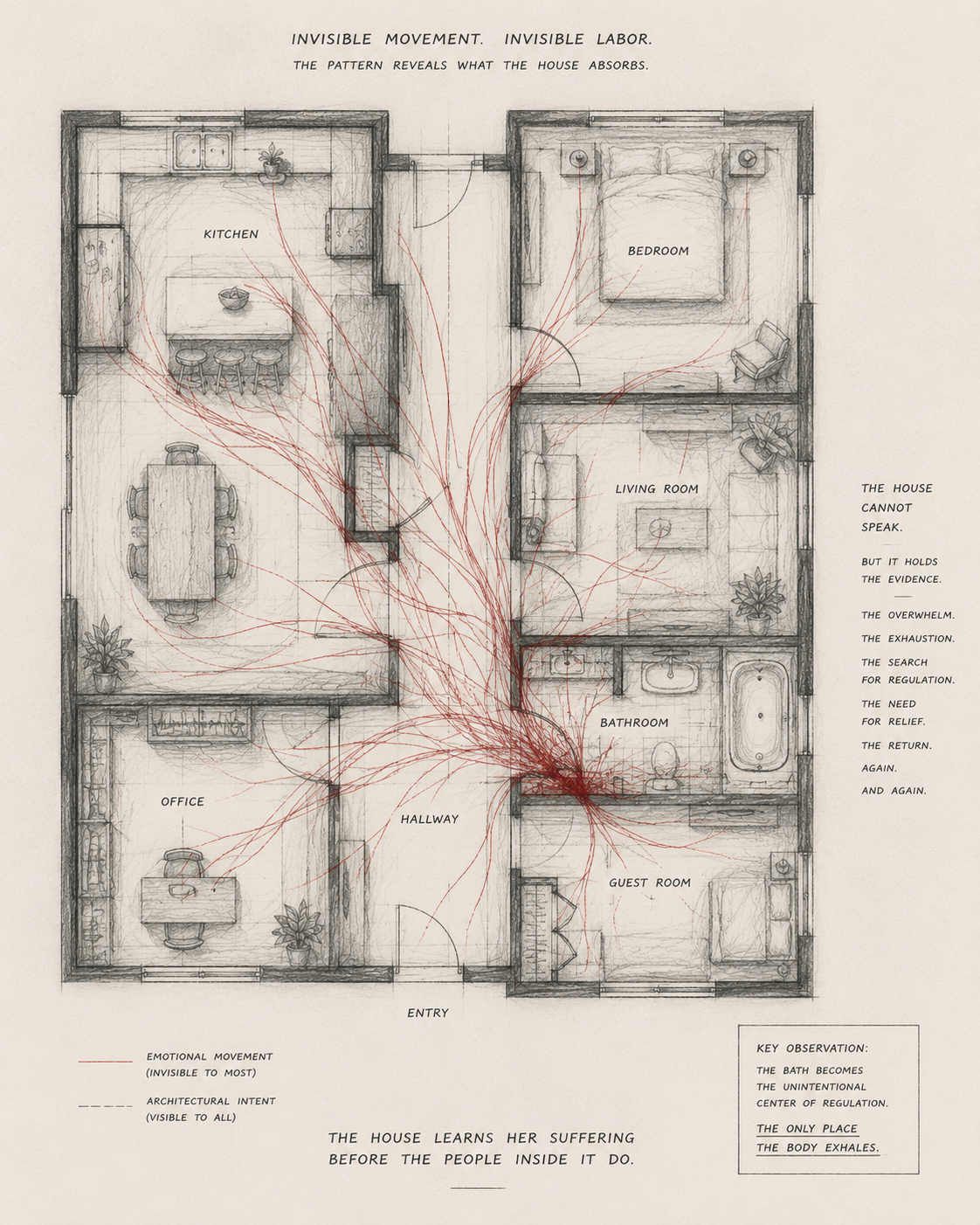

Field Note- Design of Intimacy: The House Learns Her Suffering Before the People Inside It Do.
Intimacy is often understood as connection between people.
This study suggests intimacy is also shaped by the relationship between the body and its environment.
As the nervous system becomes more sensitive to light, sound, temperature, and stimulation, ordinary spaces may be experienced differently.
The argument is rarely about the argument.
The distance is rarely about the distance.
What appears to be emotional withdrawal may be an attempt at regulation.
The floor plan reveals a pattern.
The body repeatedly seeks the same place for relief.
Not because intimacy has disappeared.
But because the nervous system requires refuge before it can reconnect.
Perhaps intimacy is not lost when perimenopause enters the room.
Perhaps it is being renegotiated.
The challenge is that one person experiences the change from the inside while everyone else experiences it from the outside.
The house often recognizes the pattern before the people within it do.